Teaching Roles
Physics Instructor · Department of Physics, Virginia Tech, USA · Aug–Dec 2018
Developed and delivered three introductory physics modules under PHYS 2984: Waves & Sound, Thermal Physics, and Optics to ~90 undergraduate students. Courses were designed for students whose prior introductory physics had not covered these topics. Designed and administered all assessments independently.
Assessment: weekly problem sets, in-class quizzes, a midterm, and a final examination per module.
-
Waves & Sound
Topics: one-dimensional, transverse, and sinusoidal waves; sound waves, the Doppler effect, power and intensity; superposition, standing waves on a string and in pipes, and interference in two and three dimensions.
-
Thermal Physics
Topics: solids, liquids, and gases; temperature, moles, and the ideal gas law; work, heat, and the first law of thermodynamics; molecular speeds and pressure; heat engines, refrigerators, and the second law of thermodynamics.
-
Optics
Topics: the ray model for light, reflection and refraction, image formation by mirrors and lenses, optical instruments, the wave model of light, interference and diffraction of light waves.
Graduate Teaching Assistant · Department of Physics, Virginia Tech, USA · 2013–2015
Taught introductory physics across four semesters, covering two mandatory sequences taken by all Virginia Tech undergraduates. PHYS 2305/2306 (Foundations of Physics, calculus-based) was for students in physical sciences, mathematics, and engineering; PHYS 2205/2206 (General Physics, no calculus prerequisite) was for students in all other disciplines. Laboratory sessions ran three times a week. Available for consultation four times weekly, open to all enrolled students from both tracks.
Assessment: theory — weekly assignments, two in-class midterms, a final examination; and written lab reports (graded).
-
Fall 2013
Lab · PHYS 2215: General Physics Laboratory. Topics: force, momentum, conservation of energy, wave and interference phenomena.
-
Spring 2014
Lab · PHYS 2305 Foundations of Physics. Topics: classical mechanics, gravitation, and thermal physics; experiments were calculus-based, in line with the theory course.
-
Fall 2014
Lab · PHYS 2306 Foundations of Physics. Topics: oscillations, waves, electricity, magnetism, optics; experiments covered resonance, electromagnetic induction, circuit analysis, and geometric optics.
-
Spring 2015
Recitations · PHYS 2305: Foundations of Physics. Planned and led independently, 2–3 times weekly; sessions covered classical mechanics, gravitation, and thermal physics, alongside assignment questions and revision ahead of each midterm and the final.
Lab · PHYS 2306: Foundations of Physics. Same topics and experiments as Fall 2014.
Pedagogy Training
Graduate Course in Physics Pedagogy · Virginia Tech, USA · Aug–Dec 2016
Coursework covered lesson design and how students learn. Core references included Randall Knight’s Five Easy Lessons: Strategies for Successful Physics Teaching and PhET, a free open-source simulation library from the University of Colorado Boulder. The central design principle across all assignments: guide students to construct results themselves — grounding mathematics in physical observation rather than presenting formulae as given. Two co-authored lesson plans and an independent unit were produced, each incorporating PhET simulations to let students explore behaviour hands-on before the theory is introduced. Materials and lesson plans are available online (GitHub).
After completing this course, I went on to teach an undergraduate physics course structured around the three modules described above. It changed how I planned and taught each of them.
-
Waves
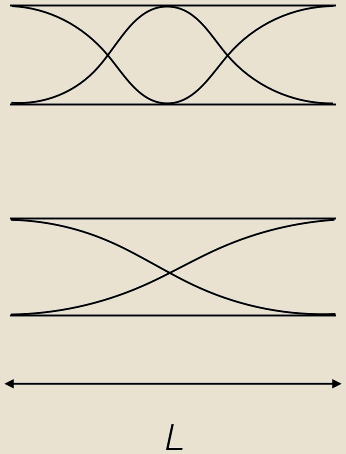
Open pipe · wave modes Opens with a hands-on tuning fork experiment: students find the resonant lengths for open and closed pipes before any theory is introduced. A guided worksheet then leads them through diagrams to identify nodes and antinodes at each boundary, deriving the standing wave conditions: \[L = \tfrac{n\lambda}{2} \quad \text{(open pipe)}, \qquad L = \tfrac{(2n-1)\lambda}{4} \quad \text{(closed pipe).}\] Comparing both cases makes the effect of boundary conditions tangible.Explore: PhET Sound simulation.
Assessment: A prediction task: students estimate the resonant length for the next harmonic mode before verifying it against the derived formula. A short follow-up quiz asks students to apply the standing wave conditions to a new tube length for both open and closed configurations.
-
Thermodynamics: Ideal Gas
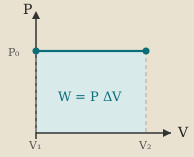
Work = area under PV curve The physical model is a gas-filled cylinder with a moveable piston: students are asked how much work the gas does as it expands by \(dx\). Starting from \(W = -\int \mathbf{F} \cdot d\mathbf{x}\) and \(P = F/A\), they derive \(F = PA\) and, noting that \(A\,dx = dV\), arrive at: \[W = P\,\Delta V,\] shown geometrically as the shaded area under a pressure–volume graph. The plan extends to \(dW = P\,dV + V\,dP\), from which constant-pressure and constant-volume processes follow naturally.Explore: PhET Gas Properties simulation.
Assessment: A PV diagram task: students sketch a constant-volume process and explain why no work is done. A short quiz then asks them to calculate the work done by a gas expanding at constant pressure between two given volumes.
-
Wave Optics
Covers the fundamental wave processes of light: polarisation, thin-film interference, and single/double slit diffraction. The lesson plan structures each topic around prediction before observation: students are asked to state what they expect before each demonstration runs, then build the theory from what they see.
Polarisation 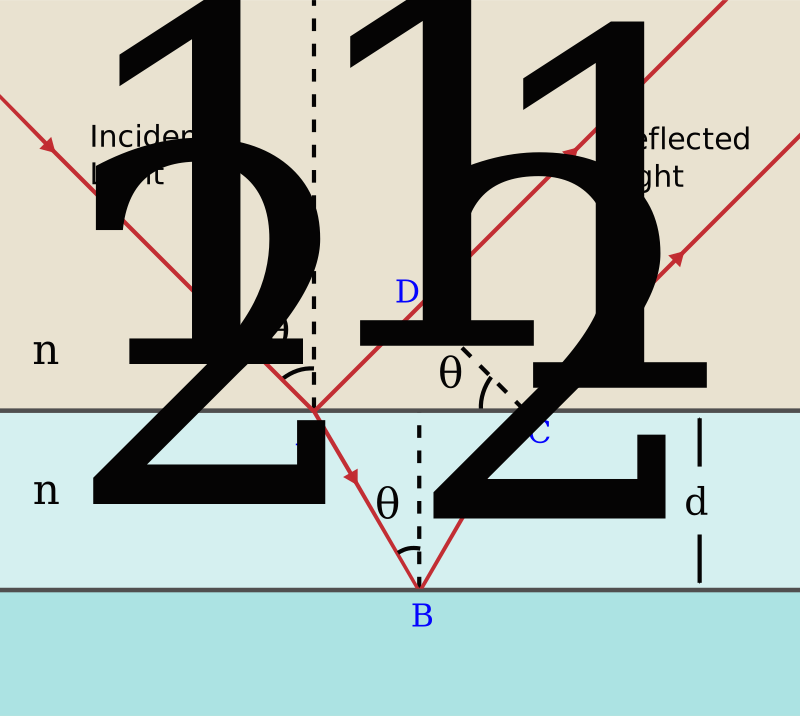
Thin-film interference 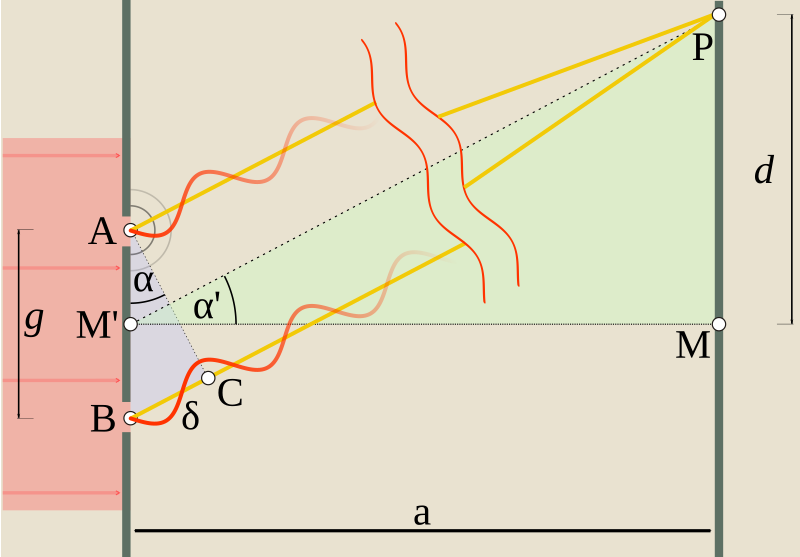
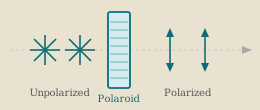
Single & double slit Schematics via Wikimedia Commons (CC BY 4.0 / CC BY-SA 3.0)- Polarisation is introduced through a slinky demonstration, establishing that light is a transverse wave. Students then use polaroid filters to explore linear polarisation, extending to circular and elliptical cases. Real-world examples anchor the concept: why sunglasses work, why the sky is blue.Explore: interactive polarisation simulation.
- Thin-film interference is framed as an everyday phenomenon: students make their own soap films and observe the colours directly, then use ray diagrams to explain what they see through constructive and destructive interference — no formula needed when the effect is visible in their hands.Explore: thin-film interference simulation.
- Single and double slit diffraction are explored using the PhET Wave Interference simulation. Students predict the interference pattern, observe it, then derive the conditions: \[d\sin\theta = m\lambda \quad \text{(double slit)}, \qquad a\sin\theta = m\lambda \quad \text{(single slit).}\] The double slit result serves as the bridge to wave–particle duality and introductory quantum mechanics.
Assessment: A two-question prediction check at the end of each sub-topic, answered in writing before the class discussion; a take-home problem set in which students calculate fringe positions and film thicknesses for given wavelengths and slit dimensions; and a 30-minute end-of-unit test covering polarisation angles, thin-film path differences, and diffraction patterns.
Student testimonials
PHYS 2984 · Virginia Tech, USA · Aug–Dec 2018
- “Asked questions that helped students think through answers rather than passively receive them.”
- “In-class demonstrations and worked examples made the material accessible.”
- “Always available for questions; structured lectures around students’ needs and very enthusiastic about the subject.”
- “The course stimulated my interest in the concepts of physics around daily life.”
- “Would not move on from a topic until it was understood by the class.”